


How Custom Jewelry Is Made: From Sketch to Finished Piece
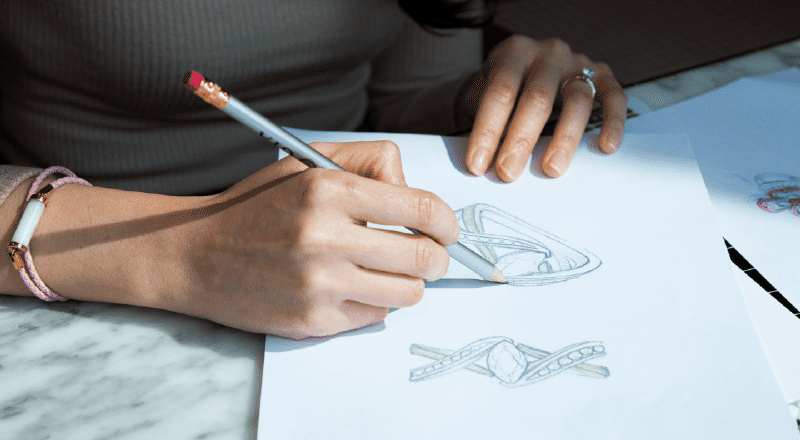
Every beautiful piece of custom jewelry starts with an idea. Sometimes it begins as a hand-drawn sketch on a piece of paper. Sometimes it is inspired by a photograph, a vintage design, or even a customer's imagination. No matter where the inspiration comes from, transforming that idea into a finished jewelry piece requires creativity, precision, advanced technology, and skilled craftsmanship.
Today, more jewelry brands, wholesalers, retailers, and designers are choosing custom jewelry manufacturing instead of mass-produced products. Personalized collections help businesses stand out in a competitive market while giving consumers something unique that reflects their own style.
Behind every custom ring, necklace, bracelet, or pair of EARRINGS is a carefully controlled manufacturing process. From concept development to final inspection, every stage plays an important role in ensuring quality, durability, and beauty.
Custom jewelry is more than manufacturing—it's the process of transforming creative ideas into wearable works of art.
Step 1: Understanding the Customer's Vision
Every successful project begins with communication. Before production starts, experienced jewelry manufacturers spend time understanding the customer's requirements in detail.
Some clients already have professional CAD drawings, while others only provide sketches, photos, or inspiration images collected online. Regardless of the starting point, every project begins with discussing the customer's goals.
Typical information collected during this stage includes:
Jewelry type (ring, necklace, earRINGS, bracelet, pendant)
Target market and brand positioning
Preferred metal materials
Gemstone requirements
Surface finishing
Logo engraving
Packaging requirements
Expected production quantity
Budget expectations
Understanding these details early helps reduce unnecessary revisions and ensures the finished product matches the customer's expectations.
Step 2: CAD Jewelry Design
After the project requirements have been confirmed, professional designers create a digital 3D model using Computer-Aided Design (CAD) software.
Modern jewelry manufacturers commonly use software such as Rhino, MatrixGold, or JewelCAD to create highly accurate digital models. Every measurement, gemstone position, claw size, engraving detail, and structural component can be adjusted before production begins.
Compared with traditional hand drawing, CAD design offers significant advantages:
Higher design accuracy
Faster modification process
Better communication with customers
Reduced production risks
More efficient material usage
Customers usually receive high-quality 3D renderings for approval before manufacturing begins. This allows them to review every detail and request adjustments without affecting production costs.
Only after the customer approves the CAD drawing does the project move forward to prototype production.
Step 3: Creating the Wax Prototype
Once the CAD design has been approved, the next step is to create a physical prototype. This is typically done using high-precision wax 3D printing or traditional hand-carved wax techniques, depending on the complexity of the design.
The wax model is an exact representation of the final jewelry piece. It allows both the manufacturer and the customer to evaluate the proportions, dimensions, stone positions, and overall appearance before precious metals are used.
If any changes are required, they can be made quickly at this stage. Making adjustments before casting saves both production time and material costs while ensuring the finished jewelry meets expectations.
For brands developing new collections, wax prototypes are especially valuable because they allow designers to evaluate multiple styles before moving into mass production.
Step 4: Lost Wax Casting
After the wax prototype is confirmed, the jewelry enters one of the most important manufacturing stages: casting.
The wax model is attached to a casting tree and covered with a special investment material. Once the mold hardens, it is heated in a kiln, causing the wax to melt away and leave a perfect cavity inside the mold. This technique is known as the lost-wax casting process and has been used in fine jewelry manufacturing for centuries.
Molten precious metal is then poured or injected into the mold under controlled conditions. Once the metal cools and solidifies, the investment material is removed to reveal the rough jewelry casting.
Depending on the customer's requirements, different materials may be used during casting, including:
925 Sterling Silver
9K Gold
14K Gold
18K Gold
Platinum
Brass
Other custom alloys
Although the cast piece already resembles the finished jewelry, it still requires several finishing processes before it is ready for customers.
Step 5: Cleaning, Assembly, and Stone Setting
Following casting, excess metal is carefully removed, and each component is cleaned and prepared for assembly. Skilled craftsmen inspect the casting for imperfections before moving on to stone setting.
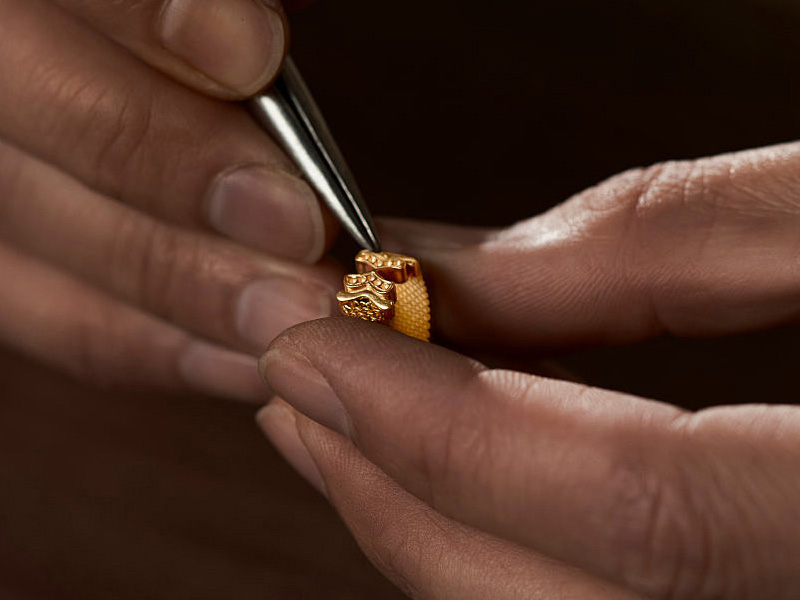
Stone setting is one of the most technically demanding stages in jewelry manufacturing. Even a perfectly designed ring can lose its beauty if the gemstones are not positioned accurately or secured properly.
Professional setters carefully place each gemstone by hand using specialized tools. The setting method depends on the design, gemstone size, and desired appearance.
Common stone setting techniques include:
Prong Setting
Bezel Setting
Pavé Setting
Channel Setting
Halo Setting
Invisible Setting
Each gemstone is inspected to ensure proper alignment, maximum brilliance, and long-term security. The goal is not only to create an attractive appearance but also to ensure the jewelry can withstand daily wear.At this stage, separate components such as pendants, clasps, chains, or decorative elements are also assembled into the complete jewelry piece before surface finishing begins.
