


A double cross necklace typically represents the Eastern Orthodox Cross (or the historical Cross of Lorraine), featuring two horizontal crossbars rather than the single bar of a standard Latin cross. The smaller upper bar represents the inscription placed above Jesus (INRI), while the larger main beam symbolizes where his arms were outstretched. Beyond sacred Christian heritage, wearing two crosses on a necklace has evolved into a bold statement of dual protection, unyielding faith, and grounded personal resilience in modern men's jewelry.
If you have seen someone wearing a double-barred pendant or layering two separate cross pendants and wondered about the significance behind it, this complete guide breaks down the true historical symbolism, the differences between sacred designs, and how to style one for everyday wear.
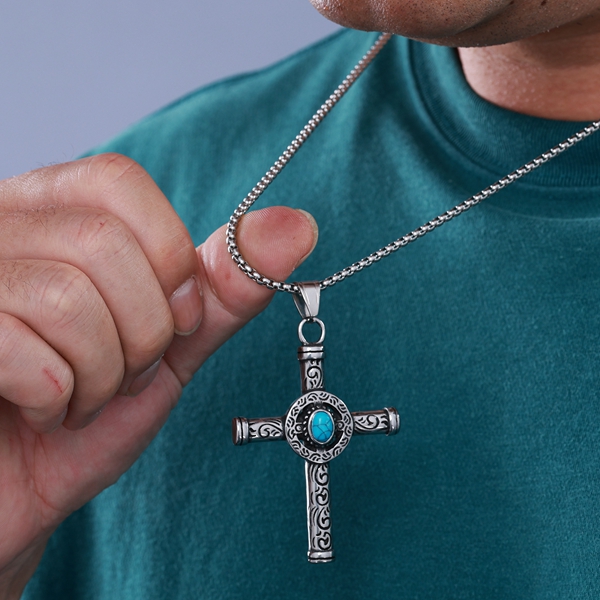
What Does a Double Cross Necklace Mean in History?
When people search for what a double cross necklace means, they are almost always referring to one of two renowned historical designs:
1. The Eastern Orthodox Cross (The Russian & Byzantine Tradition)
The most prevalent double cross in religious jewelry is the Eastern Orthodox Cross. While traditional full Orthodox crosses often have three crossbeams (including a slanted lower footrest), many jewelry designs streamline this to two distinctive bars. The top horizontal bar symbolizes the titulus—the sign Pontius Pilate ordered above Christ reading "Jesus of Nazareth, King of the Jews." The longer center beam represents the crossbar where his hands were nailed. Wearing this cross connects the wearer to profound Christian history, sacrifice, and spiritual perseverance.
2. The Cross of Lorraine (The Emblem of Resilience and Freedom)
Another iconic double-barred cross is the Cross of Lorraine, distinguished by two equal or graduated crossbars set along the upper half of a vertical post. Historically associated with Joan of Arc and later adopted as the official emblem of the Free French Forces during World War II, this double cross stands as a global symbol of courage, defiance against adversity, and unwavering honor.
What Does Wearing Two Crosses Mean on a Single Necklace?
Some wearers do not just wear a double-barred cross—they deliberately wear two separate cross pendants together on one chain or layer two chains of different lengths. In modern styling, wearing two crosses carries three distinct interpretations:
Dual Protection & Blessing: A historic tradition where one cross represents personal baptism or family heritage, while the second serves as a travel talisman or patron saint blessing.
Heritage & Personal Conviction: Many wearers pair a heritage cross (such as a Celtic knot or Byzantine cross) alongside a classic minimalist cross to bridge ancient roots with personal devotion.
Dimensional Aesthetic Statement: In modern urban, biker, and streetwear cultures, layering two cross pendants creates texture, weight, and visual depth that a single lightweight pendant cannot match.
Double Cross vs. Traditional Latin Cross: Key Differences
Choosing between a classic cross and a double-barred cross comes down to personal aesthetics and symbolic depth:
| Feature | Traditional Latin Cross | Double Cross (Orthodox / Lorraine) |
|---|---|---|
| Structure | Single horizontal beam across a vertical post | Two horizontal crossbeams with distinct heights |
| Historical Origin | Western Christian (Roman Catholic & Protestant) | Eastern Christian, Byzantine, & French Medieval |
| Visual Style | Minimalist, subtle, and widely common | Architectural, rugged, intricate, and vintage |
| Styling Vibe | Versatile everyday baseline | Standout statement piece with rich storytelling |
Why Choose 316L Stainless Steel for a Cross Pendant?
A cross necklace is not a piece of costume jewelry you take off before washing your hands—it is often meant for constant, 24/7 wear. While sterling silver tarnishes quickly with sweat and brass turns skin green, medical-grade 316L stainless steel is the gold standard for daily durability:
100% Waterproof & Sweatproof: Wear it in the gym, in the shower, or in the ocean without discoloration or rusting.
Hypoallergenic: Safe for sensitive skin with zero nickel irritation and no green residue.
Lasting Finish: Our vacuum PVD gold and vintage silver finishes resist scratches and maintain their original luster for years.
Featured: The Leimisi Orthodox Cross Necklace
Crafted from solid 316L stainless steel with intricate relief detailing, available in vintage silver, 18k PVD gold, and matte black.
Explore the Cross Necklace CollectionHow to Style a Double Cross Necklace
A double cross pendant naturally draws attention because of its detailed geometry. Here are three simple styling tips to elevate your look:
Pair with a 3mm to 5mm Cuban Link Chain: A classic box chain or medium Cuban link provides enough weight to balance the substantial silhouette of a double cross pendant.
Chain Length Placement: Opt for a 22-inch or 24-inch chain so the pendant rests naturally on the sternum, whether worn over a crewneck tee or tucked beneath an open-collar shirt.
Layering with a Slim Plain Chain: If you want a textured multi-chain aesthetic, wear a 20-inch slim chain above your 24-inch double cross necklace to create clean visual hierarchy without clashing.
Frequently Asked Questions
Is it respectful to wear an Orthodox cross necklace if you are not Orthodox?
Yes. Most Christian traditions and cultural historians view the wearing of the cross as an honorable expression of faith, reverence for sacred art, or an appreciation of Christian history. Wearing it with genuine respect for its heritage is universally welcomed.
Can I wear my stainless steel cross necklace in the shower?
Yes. Genuine 316L stainless steel will not rust, corrode, or react with regular soap and water. Simply pat it dry with a towel to prevent hard-water spots and preserve its polished shine.
Looking to find a durable, masterfully detailed pendant? Browse the full line of men's stainless steel necklaces at Leimisi to discover pieces engineered for everyday wear.
