


A dragon scale bracelet is made by weaving two different sizes of metal jump RINGS into an overlapping pattern that resembles dragon scales. This technique, known as the Dragonscale chainmail weave, creates a flexible and visually distinctive piece of jewelry.
Whether you're making a handmade accessory or exploring custom dragon bracelet designs, understanding the materials, ring dimensions, and weaving process is essential.
1. How to Make a Dragon Scale Bracelet
Making a dragon scale bracelet requires suitable jump rings, jewelry pliers, a clasp, and a consistent weaving technique.
Step 1: Prepare Materials and Tools
The basic materials include:
Metal jump rings: Two compatible sizes for the overlapping pattern.
Jewelry pliers: Two pairs for opening and closing rings.
Bracelet clasp: A lobster or toggle clasp.
Measuring tape: For checking bracelet length.
Polishing cloth: For finishing the jewelry.
For example, one documented Dragonscale ring combination uses larger rings with an 8 mm inner diameter and 1.6 mm wire thickness, together with smaller rings measuring 4.8 mm and 1.2 mm respectively.
Step 2: Create the Foundation
Arrange the jump rings according to a Dragonscale chainmail pattern. The larger rings form the visible scales, while smaller rings connect the layers.
Open each ring by twisting its ends sideways with pliers rather than pulling them apart.
Step 3: Build the Dragon Scale Pattern
Continue adding rings in the correct sequence to create overlapping layers.
Maintain consistent ring orientation and spacing. Incorrect alignment can cause the dragon bracelet to twist or become too rigid.
Step 4: Attach the Clasp and Finish
Once the bracelet reaches the desired length, attach a secure clasp.
Inspect all ring closures, remove sharp edges, and polish the finished bracelet. Check that it bends comfortably around the wrist.
2. Why Is the Dragon Scale Weaving Technique Important?
The Dragonscale weave creates the bracelet's distinctive appearance while maintaining flexibility.
Unlike simple chain bracelets, dragon scale designs use overlapping rings that form a layered surface without requiring individually manufactured metal scales.
The dimensions of the rings are particularly important.
A common measurement in chainmail jewelry is the aspect ratio (AR):
Aspect Ratio = Inner Diameter ÷ Wire Diameter
For example:
| Ring Type | Inner Diameter | Wire Diameter | AR |
|---|---|---|---|
| Large Ring | 8 mm | 1.6 mm | 5.0 |
| Small Ring | 4.8 mm | 1.2 mm | 4.0 |
These values illustrate a documented Dragonscale ring combination. They are not universal specifications for every bracelet design.
Choosing incompatible rings can make the weave difficult to assemble or reduce its flexibility.
A practical approach is to create a short sample before weaving the complete bracelet. This allows you to test ring compatibility and movement while minimizing material waste.
3. What Is the Best Material for a Dragon Bracelet?
The best material depends on durability, appearance, weight, and budget.
| Material | Advantages | Considerations |
|---|---|---|
| Stainless Steel | Strong, corrosion-resistant | Requires more force to weave |
| Sterling Silver | Premium appearance, workable | Can tarnish |
| Aluminum | Lightweight, easy to weave | Softer than steel |
| Copper | Warm, vintage appearance | Develops patina |
Practical example: Aluminum jump rings are suitable for beginners learning the Dragonscale weave because they are relatively easy to manipulate. Stainless steel is a useful option for a durable metal dragon bracelet.
Sterling silver is another option for premium jewelry. Standard sterling silver contains 92.5% silver, making it a recognized material for decorative jewelry.
For commercial dragon bracelet production, material selection should also consider finishing requirements, clasp strength, and customer preferences.
4. How Do You Choose the Right Dragon Scale Bracelet Size?
A dragon scale bracelet must fit comfortably without restricting wrist movement.
Start by measuring the wrist circumference and adding a suitable comfort allowance.
For example:
| Wrist Circumference | Initial Target Inner Circumference |
|---|---|
| 15 cm | 16.5–17 cm |
| 16 cm | 17.5–18 cm |
| 17 cm | 18.5–19 cm |
| 18 cm | 19.5–20 cm |
These are illustrative starting measurements, not fixed sizing standards.
Practical example: For a 17 cm wrist, a bracelet with an inner circumference of approximately 18.5–19 cm may be a suitable starting point.
However, the thickness of a dragon scale bracelet can affect its fit. Test the bracelet before permanently attaching the clasp.
A properly sized dragon bracelet should move naturally around the wrist without pinching the skin or sliding excessively over the hand.
5. Can You Customize a Dragon Bracelet?
Yes. Dragon bracelets can be customized through materials, colors, surface finishes, clasps, and decorative elements.
Common customization options include:
Material: Stainless steel, sterling silver, copper, or aluminum.
Color: Silver, black, gold-tone, or mixed-metal combinations.
Finish: Polished, brushed, or antique-style surfaces.
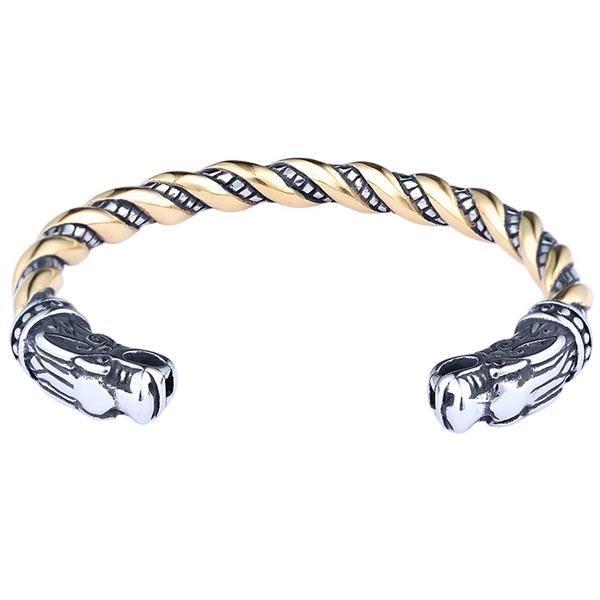
Design: Dragon-head clasps, engraved symbols, or decorative links.
Dimensions: Customized length, width, and thickness.
Practical example: A black-and-silver dragon scale bracelet can be created using contrasting jump ring colors to emphasize the overlapping pattern.
For more complex custom dragon bracelet designs, manufacturers may combine metal casting, CNC machining, polishing, and manual assembly.
This allows jewelry brands to develop unique dragon-inspired accessories beyond traditional chainmail patterns.
Conclusion
Learning how to make a dragon scale bracelet involves selecting compatible metal rings, following the Dragonscale weaving pattern, and ensuring proper sizing and finishing.
The right materials and ring dimensions help create a bracelet that is flexible, comfortable, and visually distinctive.
Whether you're making a DIY accessory or developing a custom dragon bracelet collection, careful design and consistent craftsmanship are key to achieving a high-quality finished product.
