


Most jewelry brands do not fail because they cannot find a factory. They fail because the factory quotes a minimum order quantity five times larger than their first production budget. If you are launching a collection, testing a new design, or buying for a small retail chain, working with a low MOQ jewelry manufacturer is often the difference between shipping this season and waiting another year.
This guide breaks down how low minimum orders actually work in stainless steel jewelry manufacturing — what drives the number, how small a first order can realistically be, and how to structure that order so your cash flow stays safe while you validate the design.
What "Low MOQ" Really Means in Stainless Steel Jewelry
In the jewelry trade, MOQ is usually quoted per design, not per order. A supplier saying "MOQ 300" normally means 300 pieces per style. That is the number that kills small brands, because a ten-style collection suddenly becomes a 3,000-piece commitment before a single unit has been sold.
A genuine low MOQ program works differently. The minimum is set per design but kept small enough to test the market — typically in the range of a few dozen to a few hundred pieces per style — and the supplier absorbs the setup cost of tooling, polishing, and plating across repeat orders rather than front-loading it into the first run.
Stainless steel is the material that makes this possible. Because 316L stainless steel is cast or stamped from reusable molds and finished with PVD plating rather than hand-set with precious metal, the fixed cost of starting a new design is far lower than in gold or sterling silver production. A small batch does not have to carry the same tooling burden.
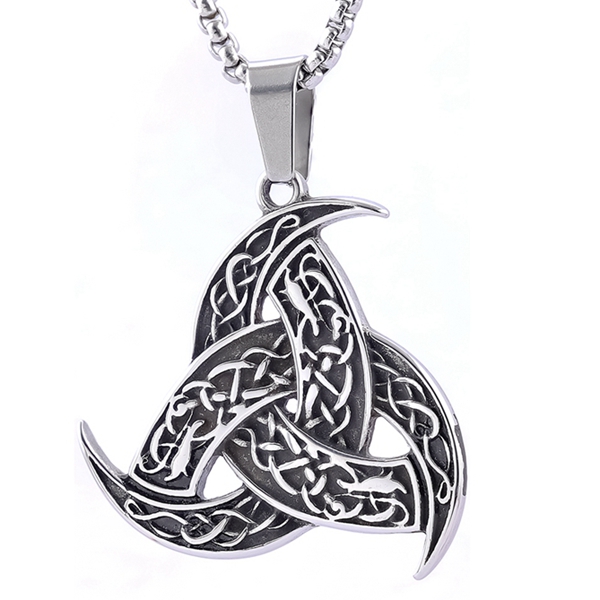
Custom stainless steel jewelry in 316L — LIGHT CUSTOMIZATION starts from 60 pcs per design.
Why Stainless Steel Is the Best Material for a Small First Order
If your first order is small, your margin per piece has to absorb the setup cost. Stainless steel wins on four practical counts:
- Lower material cost. 316L stainless steel costs a fraction of sterling silver or gold per gram, so a small run does not tie up thousands of dollars in raw material.
- Fewer defects. Stainless steel resists tarnishing, corrosion, and scratching far better than plated brass or alloy. Fewer rejects means a smaller order still yields a sellable quantity.
- Hypoallergenic and waterproof. Nickel-release concerns have pushed many buyers away from cheap alloy jewelry. 316L stainless steel is the material that lets a new brand make a durability claim it can actually keep.
- Color options without precious metal. Gold, rose gold, black, and silver finishes are all achievable with PVD plating on stainless steel, so a small brand can offer a full color range without holding gold inventory.
This is why so many independent brands start with a stainless steel ring or a pendant rather than a gold piece — the material lets them test demand cheaply. The same logic applies across a first collection: a small run of bangles or earrings can be added to a single production and shipping batch without doubling your commitment.
What Actually Drives the Minimum Order Quantity
When a supplier quotes a minimum, the number is not arbitrary. It is the sum of several fixed costs divided by a target margin. Understanding which of these you can reduce is how you negotiate a smaller first order.
| Cost driver | Why it forces a minimum | How it can be reduced |
|---|---|---|
| Mold / tooling | A new design needs a mold before the first unit exists | Choose an existing design and customize finish, logo, or packaging instead of a new shape |
| CAD and sampling | Design time and a physical sample are required before approval | Accept a standard sample and change only the plating color or engraving |
| Plating batch | PVD plating runs in batches; a tiny batch wastes the tank | Batch several designs in the same plating color into one run |
| Packaging print run | Custom logo cards and boxes have their own print minimum | Start with a stock box and a printed sticker, upgrade packaging later |
| Quality inspection | Inspection time per order is roughly fixed regardless of size | Combine styles into a single shipment so inspection is done once |
The practical takeaway: if you want the lowest possible minimum, keep the shape standard and make the branding custom. A logo engraving, a different plating color, and your own packaging card turn a stock design into your product without triggering new tooling.
How Small Can Your First Order Actually Be?
At Leimisi, our light customization program starts from MOQ 60 pieces per design, with samples produced in around 7 days. That number is deliberately set so a first order stays inside a realistic launch budget while still covering the fixed setup work described above.
For a brand testing ten designs, that structure means you can hold a full collection for a fraction of what a traditional wholesale minimum would demand. And because the same mold can be reused on the next order, the second run of a winning design costs less per piece than the first.
Two things worth knowing before you commit:
- Small orders do not mean slower production. A 60-piece run on an existing design moves through the same line as a large order; the bottleneck is sampling, not production.
- Repeat orders are where the economics improve. Once a design is proven, the minimum usually drops because tooling is already amortized.
Low MOQ vs Standard Wholesale: Which Fits Your Stage
| Low MOQ / light customization | Standard wholesale | |
|---|---|---|
| Typical minimum | From 60 pcs per design | 300–1,000 pcs per design |
| Best for | New brands, market testing, small retail chains, independent online stores | Established brands with proven sellers and stable demand |
| Customization depth | Finish, plating color, engraving, logo, packaging | Full design from CAD, exclusive molds, bespoke packaging |
| Unit cost | Higher per piece | Lower per piece |
| Cash tied up | Low | High |
| Risk if a design fails | Small, easy to absorb | Large, hard to clear |
Neither column is better in the abstract. The mistake is ordering at wholesale volume for a design you have never sold. Test with a small batch, then move the winners into a standard production order.
How to Prepare a First Order That Goes Smoothly
1. Decide what is fixed and what is flexible
Write down the design, size range, plating color, and packaging you need. Then mark which of those you would accept a standard option for. The flexible items are where your supplier can protect the low minimum.
2. Ask for the sample before the order
A sample is the cheapest risk control you have. Confirm the weight, the finish, the clasp strength, and the color against a physical piece — not against a screen. A seven-day sample cycle means this step does not delay your launch.
3. Confirm the size curve
For RINGS and bangles, a 60-piece order split evenly across sizes will leave you short on the best-selling size. Check our size chart and place a weighted split based on your target market rather than a flat one.
4. Agree the plating and finish standard in writing
PVD gold plating on stainless steel can be specified in microns. Get the thickness, color code, and any salt-spray or wear test result written into the order confirmation so there is a shared standard to inspect against.
5. Plan the packaging before production ends
Custom logo cards, pouches, and boxes have their own lead time. Order them in parallel with production, not after it, or your finished goods will sit in the warehouse waiting for a box.
How to Compare Low MOQ Suppliers
The phrase you search with changes what you find. Search for low MOQ custom jewelry and most results will be retailers reselling stock rather than factories. Search for jewelry manufacturers for small businesses and you get a mix of genuine producers and dropshipping platforms. The filter that actually works is to look for a supplier that states its minimum per design, publishes its material grade, and will send a physical sample before you pay a deposit.
A real low MOQ stainless steel jewelry program is described in pieces per design and a sampling timeline. Vague language about "flexible quantities" usually means the number will appear once you ask for your logo. Be equally careful with any listing offering wholesale stainless steel jewelry no minimum — in manufacturing, "no minimum" almost always means a stock item with no customization at all, or a minimum that reappears the moment branding enters the conversation.
Search for custom jewelry manufacturer China and the results look identical: the same stock photos, the same unverifiable claims, the same minimums buried three clicks deep. Directories of custom stainless steel jewelry manufacturers list hundreds of names, but the number that will publish a material grade, a plating thickness, and a repeat-order minimum is far smaller. Treat those three disclosures as the entry test for a stainless steel jewelry manufacturer worth sampling with — what separates the good ones is not visible on the listing page, which is why the five questions below matter more than the price column.
- What is the minimum per design, and does it change once I add engraving or custom packaging?
- Which steel grade do you use, and can you provide a material or nickel-release report?
- How thick is the PVD plating, and how do you verify color consistency between batches?
- Can I approve a physical sample before the production run?
- What is the minimum on a repeat order of the same design?
Question five is the one most buyers forget to ask, and it is the one that determines whether low MOQ is a genuine long-term model or just a one-time discount.
Red Flags When Choosing a Low MOQ Supplier
- The minimum changes after you send the design. A quote should not move once the specification is fixed.
- No physical sample offered. Any factory confident in its finishing will send a sample.
- No material certificate. If a supplier cannot confirm the steel grade and nickel-release status, you cannot make a hypoallergenic claim.
- Vague plating specification. "Gold plated" without a thickness or test result is a warranty problem waiting to happen.
- No after-sales process. Ask what happens if a batch arrives with a finish defect. The answer tells you more than the price list does.
Frequently Asked Questions
What is the minimum order for custom stainless steel jewelry?
It depends on the supplier and how much of the design is new. At Leimisi, light customization starts from 60 pieces per design, where the shape is standard and the finish, engraving, or packaging is customized to your brand. Fully bespoke designs built from CAD require a higher minimum because new tooling is involved.
Is a low MOQ order more expensive per piece?
Yes, usually. The fixed costs — tooling, sampling, plating setup, and inspection — are spread across fewer units, so the per-piece price is higher than at wholesale volume. The trade-off is that far less cash is committed to a design that has not been market-tested yet.
Can I mix several designs to reach the minimum?
Often yes, provided the designs share the same material and plating color. Batching multiple styles into one plating run and one shipment is the single most effective way to keep a small order viable, because it spreads the fixed costs across more units.
How long does a low MOQ order take?
Sampling is typically the longest step. Once a sample is approved, production on an existing design moves through the same line as a large order. The practical timeline is driven by sample approval and packaging lead time rather than by the order size itself.
Can I start with one design and add more later?
That is the recommended approach. Launch one or two designs at the lowest viable quantity, measure sell-through, then reorder the winners and add new styles. Because tooling is already paid for on the proven design, repeat orders are cheaper per piece.
Start With a Small Order, Scale With Confidence
A low MOQ manufacturer is not a discount channel — it is a risk management tool. It lets you put real product in front of real customers before you commit working capital to a full production run.
If you have a design in mind and a first-order budget that needs to stay modest, send us your concept and target quantity. We will tell you honestly what can be produced at that volume, what the sample timeline looks like, and where a small change to the specification would bring the minimum down. Browse our light customization program to see how the process runs from concept to finished order, or read how custom jewelry prototypes are made if you want to understand what happens between the brief and the first sample. You can also see the full product range to check which existing shapes are available for light customization.
