


Two brands can sell the identical stainless steel pendant — same shape, same plating, same clasp — and only one of them builds a business. The difference is rarely the product. It is the logo on the clasp, the card in the box, and the finish specification nobody else can copy. That is what a private label jewelry manufacturer actually delivers.
This guide explains how private label and OEM/ODM programs work in stainless steel jewelry, what you can and cannot put your brand on, and how to evaluate a factory before you place a first order.
Private Label, OEM, and ODM: What the Difference Actually Is
The three terms get used interchangeably in supplier conversations, which is exactly why quotes come back inconsistent. In practice they describe three different levels of work:
- Private label means the product design already exists and is sold by other brands. You apply your own branding — logo engraving, custom packaging, branded cards — and sell it as your own. No new tooling is required.
- OEM (original equipment manufacturer) means you bring the design and the factory builds it. You supply the CAD or a physical sample; the factory produces to your specification and your brand.
- ODM (original design manufacturer) means the factory has an in-house design team and develops the product, either from your brief or from its own catalogue, which you then brand and sell exclusively or non-exclusively.
Most new jewelry brands start with private label, move into OEM once a design proves itself, and use ODM when they want the factory to keep feeding the collection. Understanding which one you are asking for is the first step to getting a comparable quote.
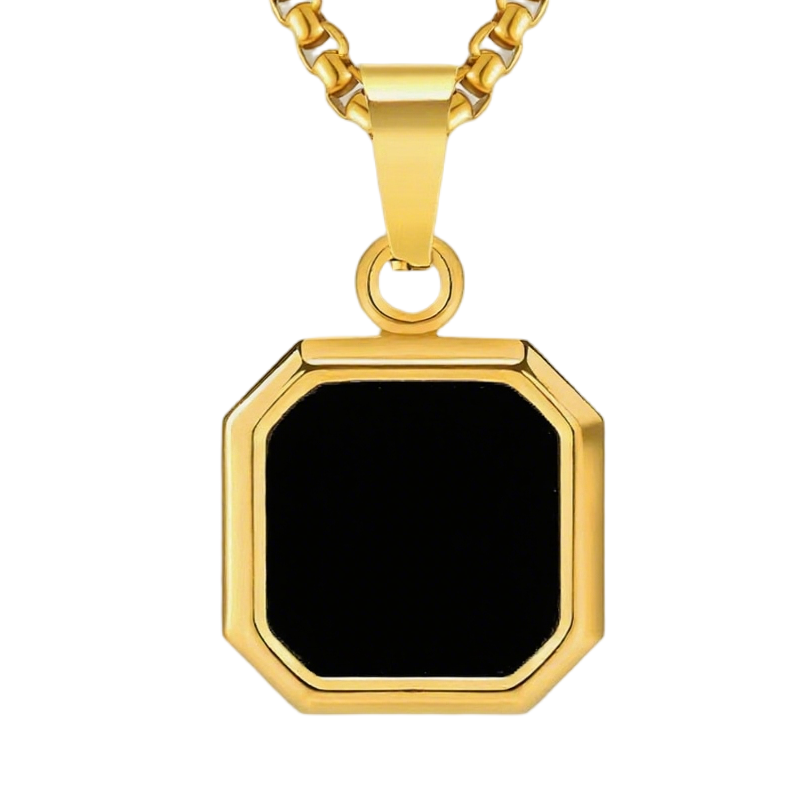
Private label stainless steel jewelry with custom gold PVD plating and your own logo.
Why Stainless Steel Suits Private Label Better Than Silver or Gold
Private label economics depend on one thing: how cheaply a design can be reproduced without losing quality. Stainless steel has a structural advantage here that precious metals cannot match.
| Factor | 316L stainless steel | Sterling silver / gold |
|---|---|---|
| Material cost per piece | Low and stable | High, tied to metal spot price |
| Branding method | Laser engraving, embossing, PVD color | Hallmarking, engraving, plating |
| Durability claim | Waterproof, tarnish-resistant, hypoallergenic | Requires care, tarnishes, softer |
| Color range without precious metal | Gold, rose gold, black, silver via PVD | Limited by alloy |
| Repeatability of finish | High — plating is a controlled process | Lower — hand finishing varies |
The practical consequence is that a private label stainless steel line can be priced for everyday retail while still carrying a real durability story. A customer who wears a piece in the shower for a year and finds it unchanged is a repeat customer. That is difficult to promise with a plated alloy product.
It also means a single material can carry an entire branded catalogue. The same 316L base supports a pendant line, a ring collection, bangles, and earrings, all finished in the same plating colour. Colour consistency across categories is one of the quiet advantages of building a brand on stainless steel rather than mixing metals.
What You Can Actually Put Your Brand On
Branding a stainless steel piece is not a single decision. It is a stack of decisions, each with its own cost and minimum. Knowing the stack lets you choose where to spend.
| Branding element | Method | Best for | Notes |
|---|---|---|---|
| Logo on the piece | Laser engraving on the clasp, tag, or reverse | All private label lines | Permanent, no added material cost |
| Finish color | PVD plating in gold, rose gold, black, or steel | Differentiating a stock shape | Specify thickness in microns |
| Enamel or inlay color | Colored enamel filling | Bold, graphic designs | Extra process step, affects minimum |
| Custom shape | New mold from CAD | Exclusive designs | Triggers tooling cost and a higher minimum |
| Packaging | Printed cards, pouches, branded boxes | Retail and gifting | Has its own print minimum and lead time |
| Chain or cord | Length, link style, clasp type | Fit and price positioning | Often the cheapest way to differentiate |
If your budget is tight, the highest-return combination is usually: a stock shape, your logo laser-engraved, a custom plating color, and branded packaging. You get a product that reads as yours on the shelf without paying for a new mold.
How a Private Label Program Runs, Step by Step
Step 1 — Brief and design direction
You share the concept: reference images, target price point, target market, and the size range you need. If you already have CAD or a technical drawing, the brief is short. If you only have a mood board, an ODM program can develop the design from there.
Step 2 — CAD and sample
The design is turned into a 3D model and then into a physical sample. This is the stage where decisions get locked: dimensions, weight, plating color, clasp type, and the engraving position. A sample cycle of around seven days keeps this stage from becoming the bottleneck.
Step 3 — Branding specification
The logo file, engraving depth, plating thickness, and packaging artwork are confirmed. Everything agreed here becomes the inspection standard for the production run, so it is worth being precise rather than assuming.
Step 4 — Production
Once the sample is approved, the run moves through molding or stamping, polishing, plating, assembly, and quality inspection. A private label order on an existing shape moves through the same line as any other order — order size does not change the process, only the batch size.
Step 5 — Packaging and shipment
Finished pieces are assembled with your cards and boxes, then packed for export. Customs documentation, carton marking, and shipping method are agreed before production ends so goods do not sit waiting.
How to Evaluate a Private Label Jewelry Supplier
Price is the easiest thing to compare and the least useful thing to decide on. These are the questions that actually separate a reliable partner from an expensive lesson.
- Can they state the steel grade? "Stainless steel" is not a specification. 316L is the grade that supports a hypoallergenic claim, and a supplier should be able to confirm it and back it with a test report.
- Can they specify plating thickness? PVD gold plating is measured in microns. Without a number, there is no standard to inspect against and no basis for a wear claim.
- Do they control plating in-house? Plating is where most quality problems appear. A factory that outsources it has less control over color consistency between batches.
- What is the minimum for a repeat order? The first order tells you the entry price; the repeat-order minimum tells you the long-term economics.
- What happens when a batch has a defect? A clear, written after-sales process is worth more than a small discount.
- Can they produce a consistent color across batches? If your bestseller is reordered in three months, the gold must match the gold your customers already bought.
How to Shortlist a Private Label or OEM Jewelry Manufacturer
Most private label jewelry manufacturers advertise the same three things: low minimums, fast samples, and OEM capability. Those claims are easy to make and hard to verify. What you can verify is whether the supplier will commit to specifics before you pay a deposit.
Start by separating the two programs you actually need. If you want custom stainless steel jewelry built from your own drawing, you need an OEM jewelry manufacturer and should expect to discuss tooling costs and mold ownership. If you want to brand an existing design, you need a private label program and should expect to discuss plating, engraving, and packaging instead. Asking the wrong one for a quote is the main reason minimums come back looking inconsistent between suppliers.
ODM jewelry manufacturers sit between the two. They carry an in-house design team and will develop the product from your brief, which suits brands that want a partner generating designs rather than a factory executing drawings.
For branded pieces, the most common request is a custom stainless steel pendant manufacturer that can handle engraving on the reverse, a specific plating color, and a chain choice — all on an existing mold. That combination is where private label returns the most, because nothing new has to be tooled. The same logic applies to any custom made stainless steel jewelry program: customization that does not touch the mold is customization that does not raise the minimum.
Three search habits help here. Searching for jewelry OEM suppliers returns mostly trading companies, while searching for a stainless steel jewelry manufacturer with a published factory address returns the producers themselves. And searching for private label suppliers without naming the material returns factories working in brass or plated alloy — a completely different cost structure and a much weaker durability story.
Common Mistakes Brands Make With Private Label Jewelry
- Ordering a custom shape before testing a stock one. New tooling is the most expensive way to learn that a design does not sell.
- Skipping the physical sample. Screen renders hide weight, clasp feel, and finish quality — the three things customers judge first.
- Leaving plating thickness unspecified. This is the single most common cause of a durability complaint later.
- Ordering packaging after production. Packaging has its own lead time and will hold up your shipment.
- Choosing on unit price alone. A supplier who saves you a few cents per piece but delivers inconsistent color costs far more in returns.
Frequently Asked Questions
What is the difference between private label and OEM jewelry?
Private label uses an existing design and applies your branding — logo, plating color, packaging. OEM means you supply the design and the factory manufactures it to your specification. Private label requires no new tooling; OEM typically does. Many brands use private label to launch and OEM once a design is proven.
Can I get my logo on stainless steel jewelry?
Yes. Laser engraving on the clasp, tag, or the reverse of a pendant is the most common method and adds no material cost. Embossing and etching are also used depending on the surface. The logo file and engraving depth are confirmed at the sampling stage.
What is the minimum order for private label stainless steel jewelry?
It depends on how much of the product is new. On an existing shape with your logo, plating color, and packaging, minimums are typically far lower than for a fully bespoke design, because no new mold is required. At Leimisi, LIGHT CUSTOMIZATION starts from 60 pieces per design.
Can I sell private label jewelry under my own brand name?
Yes — that is the purpose of private label. The piece carries your logo and your packaging, and it is sold as your product. What you should confirm in writing is exclusivity: whether the factory will also sell the same design to another brand, and under what terms.
Is PVD gold plating on stainless steel durable?
PVD plating is significantly more wear-resistant than traditional electroplating because the coating is bonded at a molecular level. Durability still depends on thickness, so specify the micron range and any wear test result in the order confirmation rather than accepting "gold plated" as a description.
How long does a private label order take?
Sampling is usually the longest stage. Once a sample is approved and branding is specified, production on an existing design runs through a standard line. Total lead time is driven mainly by sample approval and packaging production rather than by order quantity.
Build the Product Once, Then Repeat It
Private label is not about hiding where a product comes from. It is about owning the details a customer actually experiences — the finish that does not fade, the clasp that holds, the card in the box with your name on it. Get those details specified correctly on the first order and the rest of your catalogue becomes repetition rather than risk.
If you have a design direction and a target price point, send them over. We will tell you which parts can be private labelled on an existing shape, which would need OEM tooling, and what the sample and production timeline looks like at your quantity. You can review our custom design service to see the full process from concept to packaged order, check the light customization range for shapes already available for branding, or read why jewelry brands are switching to stainless steel manufacturing for the material argument in more detail.
